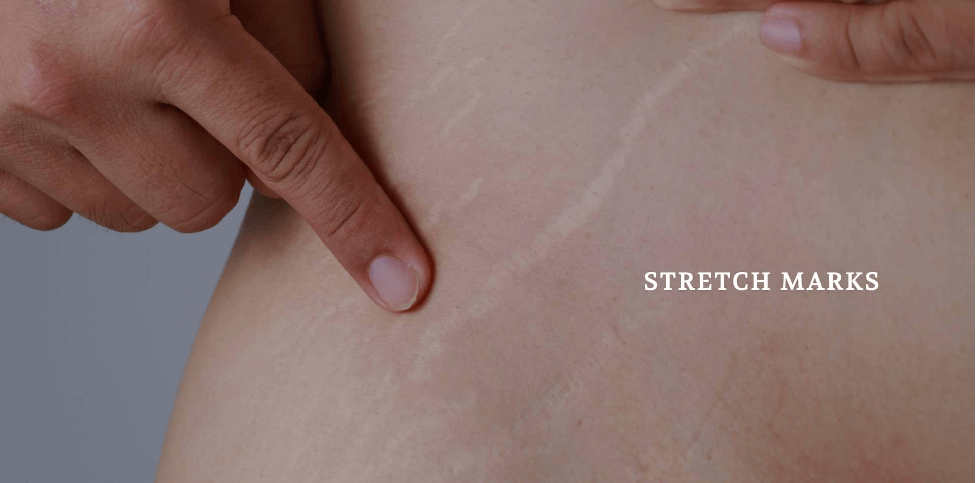
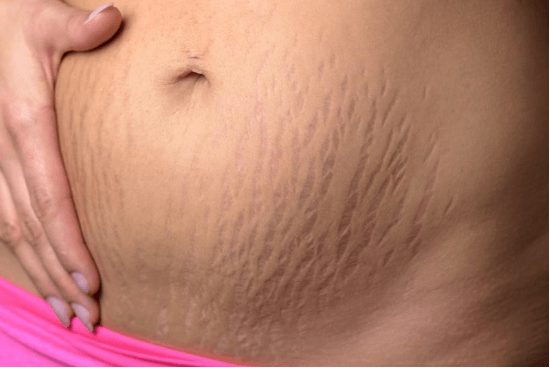
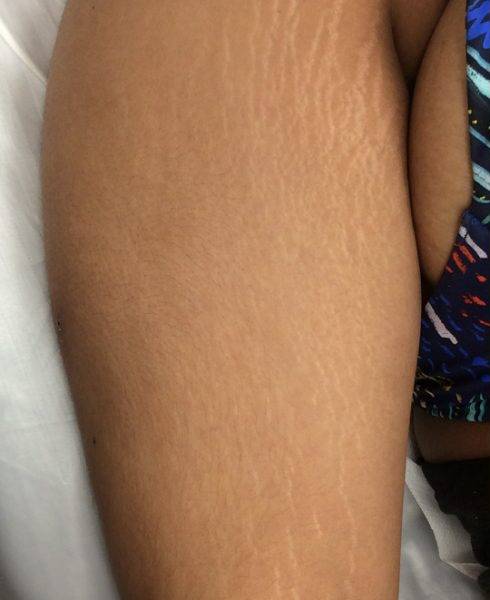
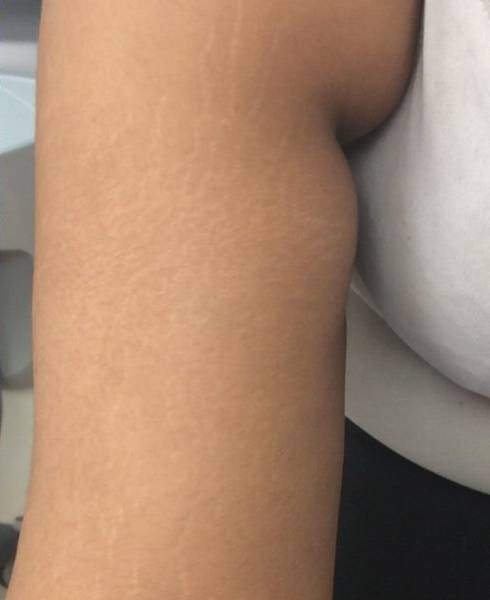
Stretch marks result from dermal tears due to collagen and elastin loss, affecting blood vessels and pigment cells, leading to skin tone loss and wrinkles. Predominantly occurring in pregnant women (90%), they also affect young females (70%) and males (40%), with genetics and rapid weight gain contributing factors. Stretch marks are indicative of skin stress and may vary in appearance and severity based on individual predispositions and lifestyle factors.
Treatment options:
Topical creams and lotions: Products containing ingredients like retinoids, hyaluronic acid, and vitamin C may help improve the appearance of stretch marks by promoting collagen production and skin hydration.
Laser therapy: fractional laser therapy and pulsed dye laser therapy, can help stimulate collagen production and reduce the appearance of stretch marks.
Microdermabrasion: This procedure involves gently exfoliating the skin to remove the outer layer and promote collagen production, which may help reduce the appearance of stretch marks.
Chemical peels: Chemical peels use acids to exfoliate the outer layer of the skin, promoting cell turnover and collagen production, which can improve the appearance of stretch marks.
Microneedling: Microneedling involves using a device with fine needles to create tiny punctures in the skin, stimulating collagen and elastin production and improving the appearance of stretch marks.
Platelet-rich plasma (PRP) therapy: PRP therapy involves injecting platelet-rich plasma from the patient’s own blood into the skin to stimulate collagen production and improve the appearance of stretch marks.
It’s important to note that while these treatments may help improve the appearance of stretch marks, complete removal may not be possible, and results may vary depending on the individual and the severity of the stretch marks.